







How Independent Grocers Are Wielding AI to Compete Against Retail Giants
Wakefern CEO Michael Stigers urges independent grocers to embrace artificial intelligence, arguing that cooperative technology investments can help smaller retailers compete against giants like Walmart and Amazon while preserving the personal service that defines independent stores.
AI Boom Fuels Flash Memory Shortage, Price Hikes Until 2026
The flash memory shortage, fueled by AI demand, geopolitical tensions, and limited production capacity, is causing soaring prices and supply chain disruptions across tech sectors like smartphones, EVs, and data centers. This structural crisis may persist through 2026, prompting adaptations and government interventions for long-term resilience.
Spotify’s AI Playlists Hand Listeners the Reins
Spotify launched AI-driven prompted playlists for U.S. and Canada premium users, enabling custom mixes via natural language prompts tied to vibes and memories. The feature empowers listeners to direct algorithms, boosting engagement amid streaming competition.
Target’s New Captain Charts Course Through Retail’s Roughest Waters in Decades
Michael Fiddelke assumes Target's CEO role amid declining sales and intense competition. His first employee memo signals urgent transformation ahead as the retail giant fights to reclaim market position against Walmart and Amazon while navigating fundamental shifts in consumer behavior.
Entity Blueprint: ELOTS Framework Arms Local Firms for AI Search Supremacy
ELOTS Local AI Advantage expands its entity architecture framework to equip local businesses for AI search dominance, unifying digital identities via Brand DNA and Knowledge Graph injection for unbreakable trust.
The Cosmic Veil: How Dark Matter Sheets Could Reshape Our Understanding of Galactic Formation
New research reveals that galaxies, including our own Milky Way, may be embedded within vast sheet-like formations of dark matter rather than spherical halos, fundamentally challenging decades of cosmological theory and reshaping our understanding of cosmic structure formation.
Sophos Workspace Protection: Browser-First Shield for Hybrid Work and AI Risks
Sophos Workspace Protection reimagines hybrid security via a browser-centric model, governing AI use and slashing SASE complexity. Powered by Island, it bundles ZTNA, DNS filtering, and data controls for distributed workforces.
The Hidden Economics of Creative Labor: How AI Compensation Models Are Reshaping the Digital Content Industry
As AI companies build trillion-dollar businesses on training data derived from creative work, a fundamental economic reckoning is underway. The question of how to fairly compensate creators whose work powers artificial intelligence systems has sparked legal battles, new business models, and debates that will reshape digital content economics.
AI-Driven Memory Shortage to Disrupt Smartphone, PC Markets in 2026
A severe memory shortage, fueled by AI's demand for high-bandwidth chips, is set to disrupt smartphone and PC markets in 2026. Manufacturers prioritize AI production, causing skyrocketing prices, specification downgrades, and shipment declines. This crisis could stifle innovation, but increased investments may alleviate it by 2027.
Archives
Categories
Search NexaPress

Inside Huawei Cloud’s Bold 2026 Partner Strategy: How Data Centers Become the Cornerstone of AI Infrastructure Expansion
Huawei Cloud's 2026 partner strategy positions data centers as strategic allies in AI infrastructure expansion, offering unprecedented revenue-sharing models and technical integration. The approach targets emerging markets with generous incentives while navigating geopolitical constraints and semiconductor restrictions.

Upwind’s Runtime Revolution: $250M Fuels $1.5B Cloud Security Unicorn
Upwind's $250 million Series B catapults it to $1.5 billion valuation, powering runtime-first cloud security amid 900% revenue surge. Backed by Bessemer and all-stars, the ex-Spot.io team targets AI-era threats for giants like Siemens and Roku.

Pentagon’s New Technology Chiefs Signal Major Shift in Defense Innovation Strategy
The Pentagon's Chief Technology Officer has selected six defense technology veterans with diverse backgrounds—from Amazon executives to marine biologists—to lead Critical Technology Areas, signaling a major shift in how the Defense Department approaches innovation and maintains technological superiority against strategic competitors.

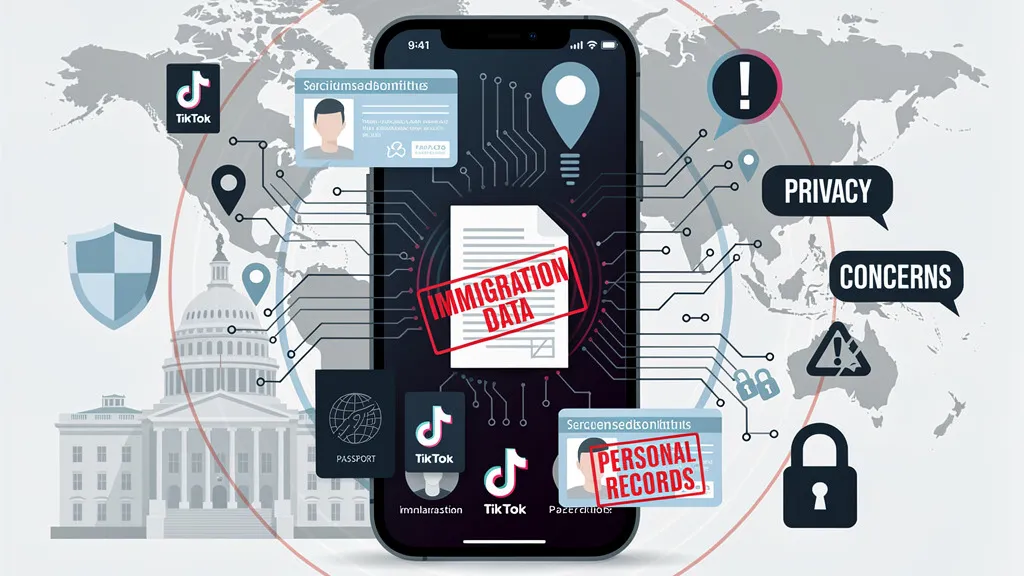
TikTok Finalizes US Restructuring Deal with Oracle, Avoids Ban
TikTok has finalized a deal to restructure its U.S. operations into a new entity majority-owned by American and allied investors, including Oracle, Silver Lake, and MGX, with ByteDance retaining a 20% stake. This hybrid model addresses data security concerns, avoids a nationwide ban, and sets a precedent for global tech sovereignty.

Finland Recruits Burned-Out US AI and Tech Talent with Visas, Better Balance
Finland is actively recruiting disillusioned U.S. tech professionals in AI and software by offering superior work-life balance, fast-track visas, and a high quality of life, aiming to attract talent by 2026 amid American burnout. This strategy challenges global tech dynamics, positioning Finland as an innovative haven.

AI Answers Demand New Rules: Why Google SEO Fails ChatGPT Citations
Mike King reveals why Google SEO tactics fail AI engines like ChatGPT, from query fan-out to HTTP 499 timeouts and chunking boosts. Case studies show 661% visibility gains via GEO.

India’s AI Classroom Revolution: Google’s Gemini Scales Where Silicon Valley Stumbles
India leads global Gemini usage for learning, teaching Google to scale AI amid 247 million students, state curricula, and access gaps. Partnerships and tools like JEE mocks position it as a worldwide proving ground.

Inside Elon Musk’s Audacious Plan to Fuse Rockets and AI: The SpaceX-xAI Megamerger
Elon Musk is merging SpaceX and xAI in a deal combining an $800 billion rocket manufacturer with a $230 billion AI startup, advancing his vision of space-based data centers while consolidating his technological empire ahead of a planned summer IPO.

DeepSeek’s Bold Push: AI Search and Agents Challenge Google, OpenAI
DeepSeek's January job postings reveal plans for a multilingual, multimodal AI search engine and persistent agents, intensifying rivalry with Google and OpenAI. Building on cost-efficient models like R1, the startup targets phone-first queries and autonomous task execution.

Dell Faces Federal Lawsuit Over Alleged 401(k) Mismanagement as Former Employees Claim Fiduciary Breaches
Former Dell employees have filed a federal lawsuit alleging systematic mismanagement of the company's 401(k) retirement plan, claiming fiduciary breaches under ERISA. The case raises critical questions about corporate responsibility for employee retirement security and could affect thousands of workers.
Inside the CNAPP Revolution: How Security Platforms Are Reshaping Enterprise Cloud Defense Strategy
Cloud Native Application Protection Platforms are transforming enterprise security by consolidating fragmented tools into unified solutions that protect applications from development through production, offering comprehensive visibility and control across multi-cloud environments while addressing the operational and economic challenges of traditional security approaches.
The Arms Race Intensifies: How AI Systems Are Revolutionizing Cybersecurity Vulnerability Detection
Artificial intelligence systems are demonstrating unprecedented capabilities in identifying and exploiting software vulnerabilities, fundamentally altering cybersecurity dynamics. This development creates both powerful defensive tools and potent offensive weapons, raising critical questions about the future of digital security.
Google Launches Doppl: AI Virtual Try-Ons Transform Online Shopping
Google has launched Doppl, an AI-powered app enabling virtual clothing try-ons with personalized, dynamic models to reduce online shopping uncertainties and returns. Amid expanding AI shopping tools like agentic checkout, it faces regulatory scrutiny over data practices, yet promises to revolutionize e-commerce personalization and consumer behavior.
Waymo’s $5.6 Billion War Chest Signals Autonomous Vehicle Industry’s High-Stakes Race for Dominance
Waymo's $5.6 billion funding round positions Alphabet's autonomous vehicle unit for aggressive expansion across U.S. cities, underscoring both the technology's promise and the massive capital required to achieve scale in the robotaxi market amid industry consolidation.
TikTok’s U.S. Lifeline: Inside the Oracle-Led Deal Rescuing ByteDance’s Crown Jewel
TikTok's new U.S. joint venture, led by Oracle with ByteDance under 20% ownership, averts a ban for 200 million users. Backed by Trump and investors like Silver Lake, the deal secures data but draws scrutiny over Chinese influence.
ServiceNow’s Earnings Beat Masks Investor AI Jitters as Shares Tumble 6%
ServiceNow beat Q4 estimates with $3.57 billion revenue and 92-cent EPS, raised 2026 guidance, and authorized $5 billion buyback, yet shares dropped 6% on AI disruption fears and M&A risks.
Subscribe Newsletter
Subscribe to our newsletter and stay up to date with the latest news, updates, and exclusive offers. Join our community today!
Authors
More ...-
 Vivian Stewart 57 articles
As a writer, Vivian Stewart covers retail operations with an eye for detail. They work through comparative reviews and hands‑on testing to make complex topics approachable. They believe good analysis should be specific, testable, and useful to practitioners. They frequently translate research into action for marketing teams, prioritizing clarity over buzzwords. Their coverage includes guidance for teams under resource or time constraints. They explore how policies, markets, and infrastructure intersect to create second‑order effects. They write about both the promise and the cost of transformation, including risks that are easy to overlook. They frequently compare approaches across industries to surface patterns that travel well. Readers appreciate their ability to connect strategic goals with everyday workflows. Their reporting blends qualitative insight with data, highlighting what actually changes decision‑making. They maintain a balanced tone, separating speculation from evidence. They are known for dissecting tools and strategies that improve execution without adding complexity. They emphasize decision‑making under uncertainty and imperfect data. Their work aims to be useful first, timely second.
-
 Emily Scott 68 articles
As a writer, Emily Scott covers consumer behavior with an eye for detail. They work through clear frameworks, case studies, and practical checklists to make complex topics approachable. They value transparent sourcing and prefer primary data when it is available. A recurring theme in their writing is how teams build repeatable systems and measure impact over time. They often cover how organizations respond to change, from process redesign to technology adoption. Their reporting blends qualitative insight with data, highlighting what actually changes decision‑making. They emphasize responsible innovation and the constraints teams face when scaling products or services. They maintain a balanced tone, separating speculation from evidence. Their coverage includes guidance for teams under resource or time constraints. Readers appreciate their ability to connect strategic goals with everyday workflows. They write about both the promise and the cost of transformation, including risks that are easy to overlook. They tend to favor small experiments over sweeping predictions. They value transparency, practical advice, and honest uncertainty.
-
 Emily Chen 63 articles
Known for clear analysis, Emily Chen follows retail operations and the people building it. They work through clear frameworks, case studies, and practical checklists to make complex topics approachable. They often cover how organizations respond to change, from process redesign to technology adoption. Readers appreciate their ability to connect strategic goals with everyday workflows. They examine how customer expectations evolve and how organizations adapt to meet them. They value transparent sourcing and prefer primary data when it is available. A recurring theme in their writing is how teams build repeatable systems and measure impact over time. They also highlight cultural factors that determine whether change sticks. They avoid buzzwords, focusing instead on outcomes, incentives, and the human side of technology. They explore how policies, markets, and infrastructure intersect to create second‑order effects. They believe good analysis should be specific, testable, and useful to practitioners. They tend to favor small experiments over sweeping predictions. They value transparency, practical advice, and honest uncertainty.
-
 Layla Reed 56 articles
Known for clear analysis, Layla Reed follows retail operations and the people building it. They work through long‑form narratives grounded in real‑world metrics to make complex topics approachable. They believe good analysis should be specific, testable, and useful to practitioners. They avoid buzzwords, focusing instead on outcomes, incentives, and the human side of technology. They explore how policies, markets, and infrastructure intersect to create second‑order effects. They frequently compare approaches across industries to surface patterns that travel well. They are known for dissecting tools and strategies that improve execution without adding complexity. A recurring theme in their writing is how teams build repeatable systems and measure impact over time. Their reporting blends qualitative insight with data, highlighting what actually changes decision‑making. They often cover how organizations respond to change, from process redesign to technology adoption. They maintain a balanced tone, separating speculation from evidence. Outside of publishing, they track public datasets and industry benchmarks. Readers return for the clarity, the caution, and the actionable takeaways.
-
 Stella Evans 57 articles
Stella Evans is a journalist who focuses on AI deployment. They work through trend monitoring with careful context and caveats to make complex topics approachable. They believe good analysis should be specific, testable, and useful to practitioners. They examine how customer expectations evolve and how organizations adapt to meet them. Their reporting blends qualitative insight with data, highlighting what actually changes decision‑making. Readers appreciate their ability to connect strategic goals with everyday workflows. They write about both the promise and the cost of transformation, including risks that are easy to overlook. They also highlight cultural factors that determine whether change sticks. Their coverage includes guidance for teams under resource or time constraints. Their perspective is shaped by interviews across engineering, operations, and leadership roles. They often cover how organizations respond to change, from process redesign to technology adoption. They maintain a balanced tone, separating speculation from evidence. They are interested in the economics of scale and operational resilience. They prefer evidence over hype and explain trade‑offs plainly.
-
 Micah Shaw 60 articles
Micah Shaw specializes in developer productivity and reports on the systems behind modern business. Their approach combines interviews with operators and data‑backed analysis. Their perspective is shaped by interviews across engineering, operations, and leadership roles. Readers appreciate their ability to connect strategic goals with everyday workflows. They frequently compare approaches across industries to surface patterns that travel well. Their reporting blends qualitative insight with data, highlighting what actually changes decision‑making. They maintain a balanced tone, separating speculation from evidence. Their coverage includes guidance for teams under resource or time constraints. They emphasize responsible innovation and the constraints teams face when scaling products or services. They are known for dissecting tools and strategies that improve execution without adding complexity. They look for overlooked details that differentiate sustainable success from short‑term wins. A recurring theme in their writing is how teams build repeatable systems and measure impact over time. They watch the policy landscape closely when it affects product strategy. Their work aims to be useful first, timely second.
Submit An Article
Share your perspective with confidence. Your experience could inform, inspire, and help someone live better.
The Battle for Browser Autonomy: How AI Agents Are Redefining Web Interaction Benchmarks
New benchmarking standards reveal significant performance gaps among AI browser agents, with top systems achieving 85% success rates on complex tasks while competitors struggle below 40%. The evaluation framework tests real-world capabilities across e-commerce, enterprise software, and government portals, marking a critical inflection point for autonomous web automation technology.
The $300 Billion Convergence: How SpaceX’s xAI Merger Reshapes Musk’s Corporate Empire
SpaceX's absorption of xAI in a $50 billion transaction has propelled the combined entity's valuation near $300 billion, approaching Tesla's market cap and reshaping Musk's business empire. The merger integrates advanced AI capabilities into aerospace operations, creating unprecedented synergies across satellite communications, autonomous systems, and Mars colonization efforts while raising questions about corporate governance and market concentration.
Accessibility’s Product Void: Why Software Needs a Dedicated PM Now
Software firms falter on accessibility due to treating it as debt without product ownership. Enter the Accessibility Product Manager: a strategic role blending business, UX, and tech to drive compliance, revenue, and innovation amid 2025 regulations.
The Silent Crisis: Why Most Healthcare Organizations Still Fail to Encrypt Patient Data at Rest
Healthcare organizations continue storing patient data unencrypted despite mounting cyber threats and regulatory pressure. This systemic failure exposes millions to data breaches, stemming from legacy systems, budget constraints, and misunderstood compliance requirements that prioritize checkboxes over genuine security.
Google’s Search Turns Personal: AI Mode Taps Gmail, Photos for Tailored Answers
Google's Personal Intelligence brings Gmail and Photos context to AI Mode in Search, delivering tailored responses for premium subscribers. Opt-in feature enhances shopping, travel, and creative queries while prioritizing privacy controls.
Carbon Robotics’ Vision AI Breakthrough Promises to Revolutionize Precision Agriculture at Scale
Carbon Robotics unveils proprietary AI model for plant identification, marking a breakthrough in precision agriculture. The technology promises plant-level crop management at commercial scale, reducing inputs while improving yields through advanced computer vision trained on millions of real-world field images.